The behavioral-health expansion of 2024 was the right size.
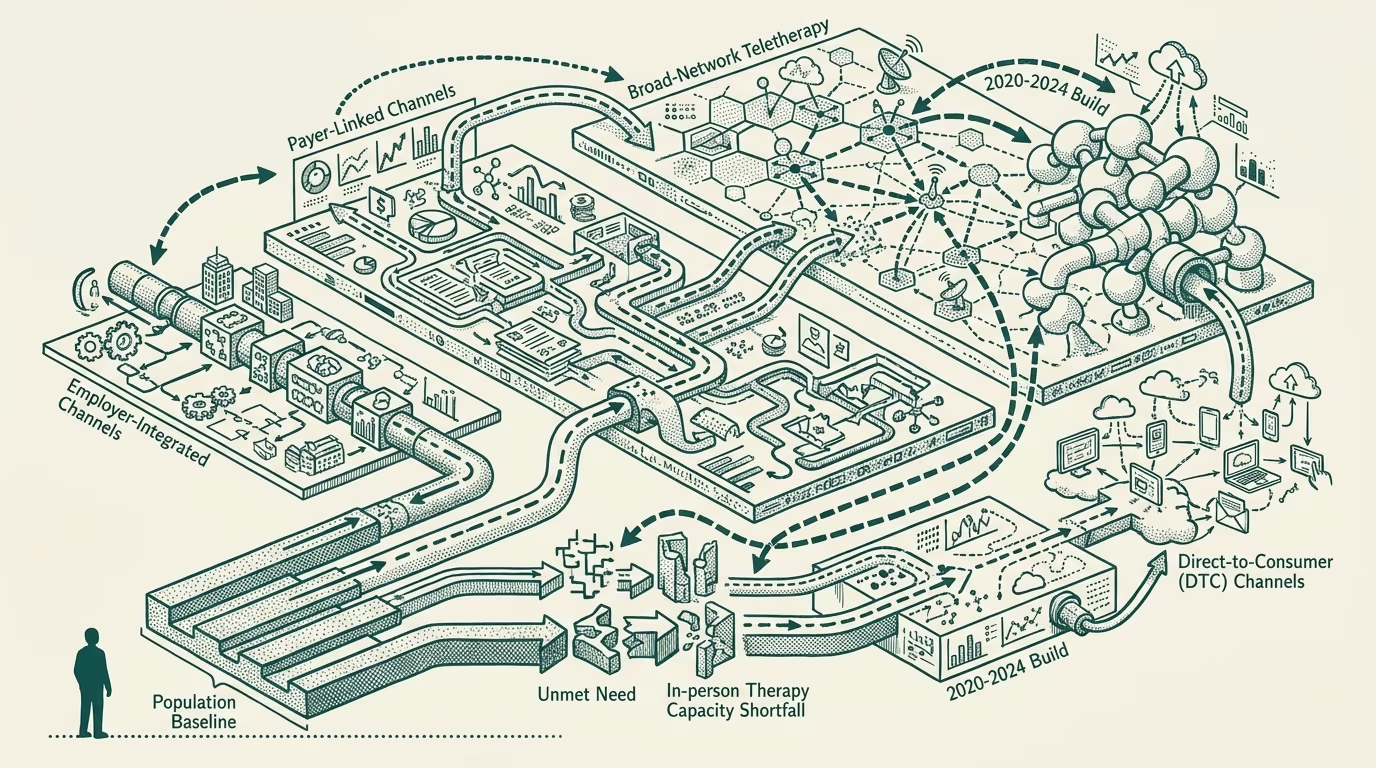
The trade-press consensus on the behavioral-health vertical through mid-and-late 2024 settled on a single working narrative: the post-COVID expansion was overbuilt, the consolidation through 2024 (Headspace and Ginger merging, Lyra and Spring Health competing for the same employer accounts, Talkspace pivoting toward employer-and-Medicare contracts, several smaller players exiting or being acquired) was the inevitable correction, and the next two years would see further contraction. The narrative was confidently stated, broadly accepted, and (this is the part that the trade press has been generally not running) substantially wrong on the population-level sizing question.
The retrospective view from late 2024 is that the behavioral-health expansion of 2020-2024 was roughly the right size at the U.S.-population level. The U.S. has a structural shortfall in behavioral-health capacity that pre-dates COVID, was deepened by COVID, and has not been closed by the expansion. What the trade press was reading as overbuild was not overbuild at the population level; it was overbuild in specific channels combined with under-build in others. The category was correctly sized in aggregate; the distribution of where the build went was wrong. This is a different problem and the corrective action it implies is different.
This essay walks the demand picture, the channel-level sizing analysis, the channels where the build was right or under-sized, and the channels where it was over-built. The aim is to leave the reader with a more precise read on what is going to happen in the category through 2026-2027 than the trade-press overbuild narrative produces.
The demand picture
The U.S. population has roughly 60-65 million people with diagnosable behavioral-health conditions in any given year. The pre-COVID treatment infrastructure was reaching about 40-45 percent of that population with any form of treatment, with substantial geographic variation (urban-with-good-insurance reaching the high end of that range, rural-and-Medicaid reaching well below it). The treatment gap, defined as people with diagnosable conditions not receiving treatment, was on the order of 35 million people pre-COVID.
COVID widened the gap on both ends. Demand rose because the conditions became more prevalent and because the cultural barrier to seeking treatment dropped. Supply shrunk because some practices closed, telework-induced licensing complications removed cross-state capacity, and the underlying provider workforce was already short and continued to be short. By 2022 the treatment gap was somewhere between 40 and 50 million people, depending on which prevalence estimate is used.
The post-2020 expansion of digital-first behavioral-health products (Headspace, Calm, Lyra, Spring Health, Talkspace, BetterHelp, Cerebral, the Medicare-and-Medicaid digital expansions, the employer-and-payer-integrated programs) added capacity. By 2024 the expansion had absorbed perhaps 5-10 million additional patients into some form of treatment, depending on how the boundary of "treatment" is drawn. The treatment gap is still somewhere between 30 and 40 million people. The expansion did not overshoot the demand. It came in materially below the demand at the population level.
The aggregate-sizing read is that the category is structurally under-built, not overbuilt. The trade-press narrative was reading the channel-level dynamics (which contained genuine overbuild) as a category-level dynamic, and getting the conclusion wrong because the channel mix was the actual story.
The channel-level analysis
The expansion happened across roughly five named channels. Each had a different sizing trajectory through 2020-2024.
The employer-channel (Lyra, Spring Health, Modern Health, the employer-EAP-modernization category) grew with employer benefits-budget reallocation. The growth was tied to the size of the employer's behavioral-health benefit and the willingness of HR to integrate digital-first products into the broader benefits stack. Growth has been steady, the unit economics work, and the channel is correctly sized or under-sized relative to the willingness of large employers to expand the benefit. This channel is not the one the overbuild narrative was about.
The Medicare-Advantage and Medicaid-integrated channel (Brave Health, Concert Health, Quartet, several specialty Medicaid-focused vendors, plus the integrations the major MA plans built with the digital-first vendors) grew with payer-channel partnership. Growth has been slower than the employer channel because the payer-integration timeline is longer, but the channel is also correctly sized or under-sized relative to the demand from the Medicare-and-Medicaid populations who carry a disproportionate share of the under-served unmet behavioral-health need.
The integrated-primary-care channel (the digital-first vendors who plug into primary-care practice workflows, plus the in-person-augmented care models like Talkiatry, Rula, Headway, Alma) grew with primary-care-practice modernization. The channel is correctly sized relative to the available primary-care integration capacity, which has been growing but not at the pace the demand-side would justify. This is a channel where the under-build is most acute and where the next 2-3 years of category growth should concentrate.
The direct-to-consumer subscription channel (BetterHelp, Cerebral pre-controversy, the various app-based subscription products) grew with consumer-acquisition economics and is the channel where the trade-press overbuild narrative was substantially correct. The unit economics depend on consumer-acquisition cost staying low while subscription retention stays high, and through 2022-2024 both have moved against the channel. Several of the major DTC subscription vendors are running unit economics that do not work at the customer-acquisition costs the channel currently produces, and the consolidation through 2024 has been concentrated here.
The broad-network teletherapy channel (the platforms that connect any patient to any therapist, with the platform taking a percentage of the per-session fee) is the second channel where overbuild was substantially correct. The platforms are generally not differentiated, the supply-side (therapists) is shared across multiple platforms, and the take-rate compression as platforms compete on therapist supply has produced unit economics that do not work for most of the platforms operating. Consolidation in this channel has run alongside the DTC consolidation and is going to continue.
What the trade press got wrong
The trade-press narrative read the DTC and broad-network-teletherapy consolidation as a signal about the entire category. The signal was about the channel structure, not the category. The channels that correctly read the unit economics (employer, payer-integrated, integrated-primary-care) have continued to grow through 2024 and are positioned to continue growing through 2026-2027. The channels that built on consumer-acquisition-funded subscription economics or on commoditized teletherapy aggregation have consolidated and will continue to consolidate.
The structural reason the trade-press narrative misread this is that the DTC and broad-network-teletherapy channels were the most visible to consumers and to the press. The employer-and-payer-integrated channels are mostly B2B2C, with the consumer experience downstream of the employer or payer relationship, and the press coverage of these channels has been thinner because the customer story is less press-friendly. The press was looking at the visible channels, and the visible channels were the over-built ones. The conclusion generalized incorrectly.
What 2026-2027 likely looks like
Through 2026-2027 the category is likely to settle into a stable shape with three clear channel-leadership positions and two channels in continued consolidation.
The three lead channels are the employer-channel (with Lyra, Spring Health, and Modern Health as the dominant players, plus the employer-channel offerings of the larger health-plan companies), the payer-integrated channel (with the major payers having selected one or two vendor partners and committed to deeper integration), and the integrated-primary-care channel (with Talkiatry, Rula, Headway, Alma, and a couple of others as the dominant primary-care-integrated players). These channels are running unit economics that work and are correctly sized for the demand they serve.
The two consolidating channels are the DTC subscription and the broad-network teletherapy. Both will likely shrink to a smaller number of players running tighter unit economics. The DTC channel will retain a meaningful share of the consumer behavioral-health spend but will be smaller than its 2022 peak. The broad-network teletherapy channel will exist mostly as platform infrastructure for the lead channels, not as a stand-alone consumer category.
The treatment gap will remain large. The category, even at its 2026-2027 stable shape, will not close the underlying U.S. unmet behavioral-health demand. Which means there is still room for more category growth in the lead channels, more integration with primary-care, and more channel-innovation work that the next generation of operators in the category will run against. The retrospective from 2030 will likely look at 2024-2026 as a period when the category corrected its channel mix without correcting its overall under-build relative to the demand picture.
What this leaves the operator class with
The structural read on this is that the trade-press overbuild narrative was the wrong frame. Building behavioral-health products in 2024-2025 against the assumption that the category was overbuilt produced wrong sizing decisions. Building against the channel-mix-was-wrong frame produces better decisions: invest in the lead channels, avoid the consolidating channels unless the unit economics are durably better than the channel average, and recognize that the overall demand is still well above the category's combined supply.
The behavioral-health expansion of 2024 was the right size at the population level. It was the wrong shape across channels. The next two years are about correcting the shape, not contracting the size. Operators reading the trade-press narrative as a signal about the size are running the wrong play.
—TJ