Canada is 44 of 47. The number is the citation, not the country.
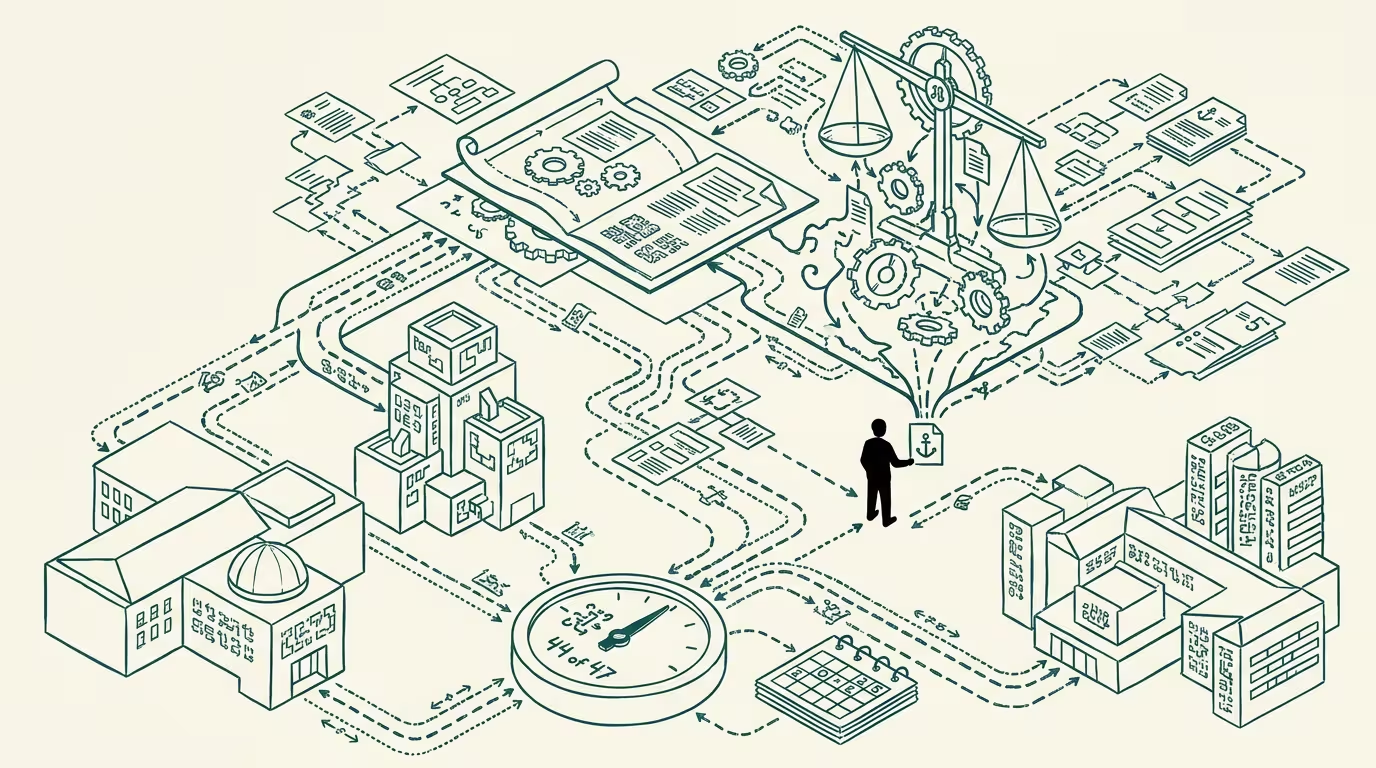
KPMG's 2025 global AI literacy survey ranked Canada 44th of 47 countries on AI readiness and AI literacy metrics. The University of Toronto Temerty Faculty of Medicine adopted the figure as the anchor citation in its 2025 healthcare-AI strategy document. League, MEDFAR, and several other Canadian health-AI operators reused the datum as policy framing through Q4 2025 and into 2026. By early 2026 the "44 of 47" number was the credibility benchmark for any Canadian healthcare-AI argument addressing the policy class.
The number became the citation, not the country.
What does that pattern teach? _A single survey datum, methodologically narrow and statistically contested, became the rhetorical anchor for an entire policy-class conversation._ The pattern is operator-class signal about how citation discipline works in healthcare-AI policy framing.
Why are low-mass events disproportionately impactful in policy framing? Because the rhetorical anchor is calibrated to memorability, not to epistemic weight. The KPMG survey is not load-bearing on its own merits — the methodology is documented but contested, the sample sizes vary across countries, the AI-readiness construct is not standardized across the surveyed populations. The survey's downstream rhetorical impact comes from the rank-ordering producing a memorable headline number ("44 of 47") and the early policy-class adoption locking in the citation as the anchor for subsequent arguments. The operator-level lesson is that low-mass events with memorable numbers are exactly the events that produce disproportionate downstream impact, and citation discipline matters precisely because the impact runs longer than the original event's epistemic weight.
What's the operator discipline? Use the citation carefully or not at all. The Temerty Medicine document used the citation cleanly — it cited the source, named the methodology, and engaged with the policy implications without overclaiming the survey's epistemic weight. The League operating posture used the citation more aggressively as a credibility marker. Both uses are operator-tier-coherent, but they carry different risks. The careful citation survives audit by methodology-class critics. The aggressive citation does not. Operators have to decide which posture they are running on each citation, and the decision should be made explicitly.
Where does the same pattern recur? Across healthcare-AI policy framing generally. Every healthcare-AI policy conversation in 2025-2026 has its own "44 of 47" — a low-mass event with disproportionate rhetorical impact. The operator discipline is to identify the equivalent citations in adjacent categories before they become the unchallenged anchor citations for those categories' policy frames. The early-engagement window is roughly 6-12 months between the citation's initial appearance and its lock-in as the policy-class anchor. Operators in the window can shape the citation's downstream impact. Operators after the window have to argue against the locked-in anchor, which is operating-harder.
The same shape recurs across categories beyond healthcare-AI. Finance-AI policy framing has its own anchor-citations. AI-policy-and-regulation discussions have their own. Each category has the same shape — low-mass survey-or-report data point becomes the disproportionate-rhetorical-anchor — and each has the same operator-grade window for shaping the citation's impact.
What survives all of this is that the KPMG "44 of 47" datum is one of the cleaner 2025 examples of a low-mass event producing high-impact policy framing in Canadian healthcare-AI, the citation discipline that operators run on it determines whether the citation's impact is durable or contestable, and the cross-category lesson is to identify the equivalent citations in adjacent categories early and to engage with them before they lock in.
Canada is 44 of 47. The number is the citation, not the country. The country's actual AI-readiness position is more nuanced than the survey's rank-ordering captures, but the citation runs against the country's reputation independent of the underlying nuance. Operators using the citation carefully are operating-coherent. Operators using it as a rhetorical anchor without engagement with the methodology are taking on credibility-class risk that doesn't always show up until a methodology-class critic engages.
—TJ