The Canadian primary care wait-time data worsened through Q3 2024. The AI-scribe announcement didn't help.
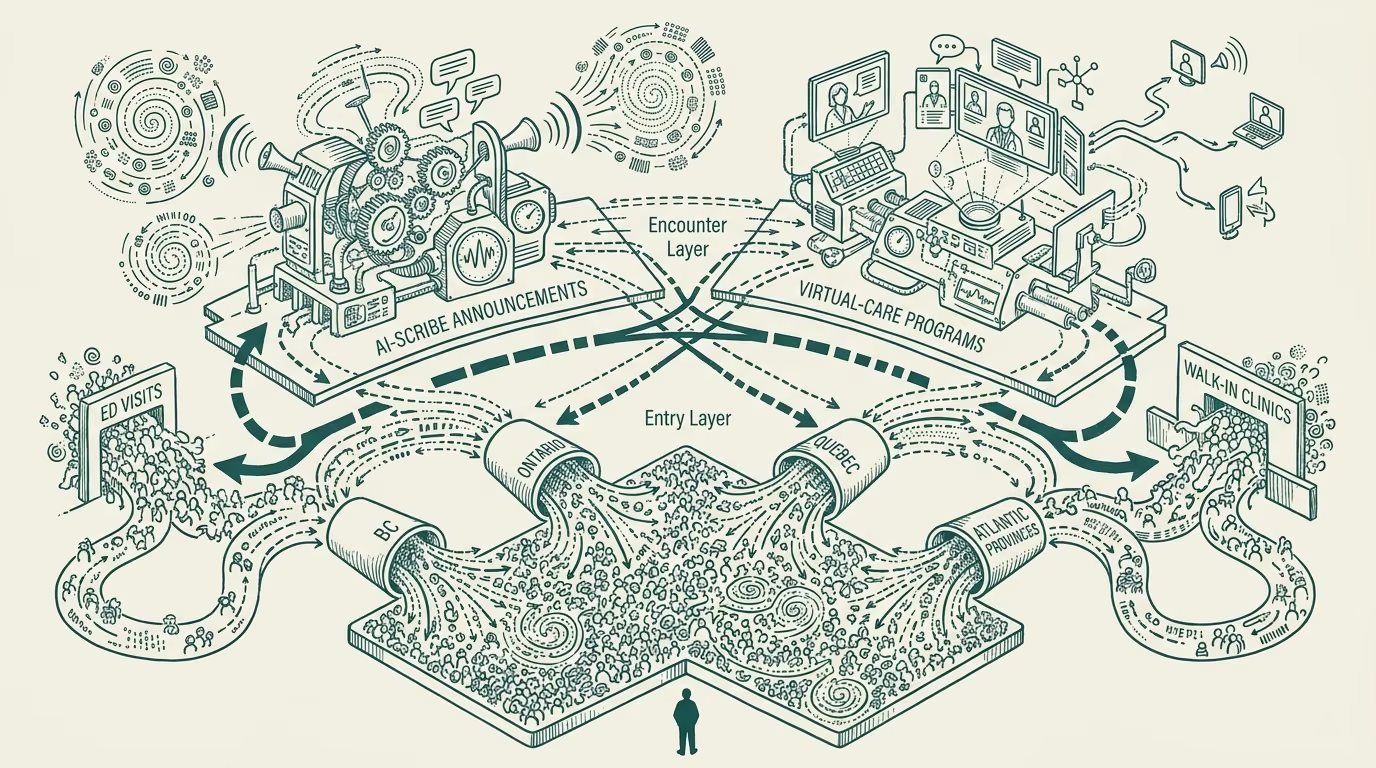
The Canadian primary-care access data through Q3 2024 continued the deterioration trajectory the prior several quarters had been showing. The unattached-patient population grew, with the regional reporting from Ontario, Quebec, BC, and the Atlantic provinces all showing meaningful increases. The average wait-time for primary-care attachment lengthened across most of the major provincial systems. The downstream-utilization metrics (ED visits for primary-care-class issues, walk-in clinic volume, virtual-care utilization for non-acute issues) continued rising as patients without primary-care attachment routed their care through the available substitutes.
The political-class and trade-press commentary through the same period was concentrated on the AI-scribe deployment announcements (Canada Health Infoway program scaling, provincial-level pilots in Ontario and BC, the various clinician-side AI tooling announcements), the virtual-care program expansions, and the broader theme of healthcare-system modernization through technology investment. The announcements were politically and operationally substantial. They did not address the routing-and-attachment problem that the wait-time data was actually measuring.
The gap between the announcements and the data is the central structural fact. AI scribes save physician time at the per-encounter level. Virtual-care programs provide care to patients who can access them. Neither directly addresses the matching infrastructure that connects an unattached patient to a primary-care practice with available capacity. The interventions that would address the matching problem (centralized patient-attachment registries, regionally-coordinated capacity-tracking, AI-augmented patient-routing tools, the broader matching-and-coordination infrastructure) had not been deployed at scale during the same period.
The AI-scribe deployment is helpful at the margin. It saves physician time, which means each attached patient experiences slightly better access to their attached physician's time. The benefit accrues to attached patients. The unattached patients, who are the population the wait-time data was measuring, do not benefit because they are not attached to a primary-care practice that the AI scribe operates inside.
The virtual-care expansion is also helpful at the margin. It provides access to care for patients who can use the virtual-care channel and who have non-acute issues the channel can address. The benefit is real but is structurally upstream of the attachment problem. The unattached patient who uses virtual-care still does not have a primary-care relationship; they have an episodic-care substitute that does not provide the longitudinal-care-relationship the attachment problem is meant to produce.
The structural read on the Q3 2024 data is that the political-class and trade-press attention is on the wrong intervention category. The interventions being announced are real and helpful at the margin; they are not the interventions that move the wait-time data. The interventions that would move the data are at the matching-and-routing layer, with the financing-and-coordination questions discussed elsewhere being the actual blocker.
For the political-class running the Canadian healthcare file, the structural read is that announcement-class activity is not equivalent to data-moving activity. The trajectory through 2025-2026 will continue to deteriorate if the intervention category does not shift toward the matching-and-routing layer. The trade-press will continue to cover the announcement-class activity because the announcements produce press-friendly events that the data-moving structural work does not.
The data is the data. The announcements are the announcements. The two have not been moving together through 2024, and the operator-class working with the access metrics has been able to read the gap clearly. The political-class will eventually catch up to the gap. The data will continue to compound until they do.
—TJ