Illinois banned AI therapy. The prohibition names the liability every mental-health startup avoided naming.
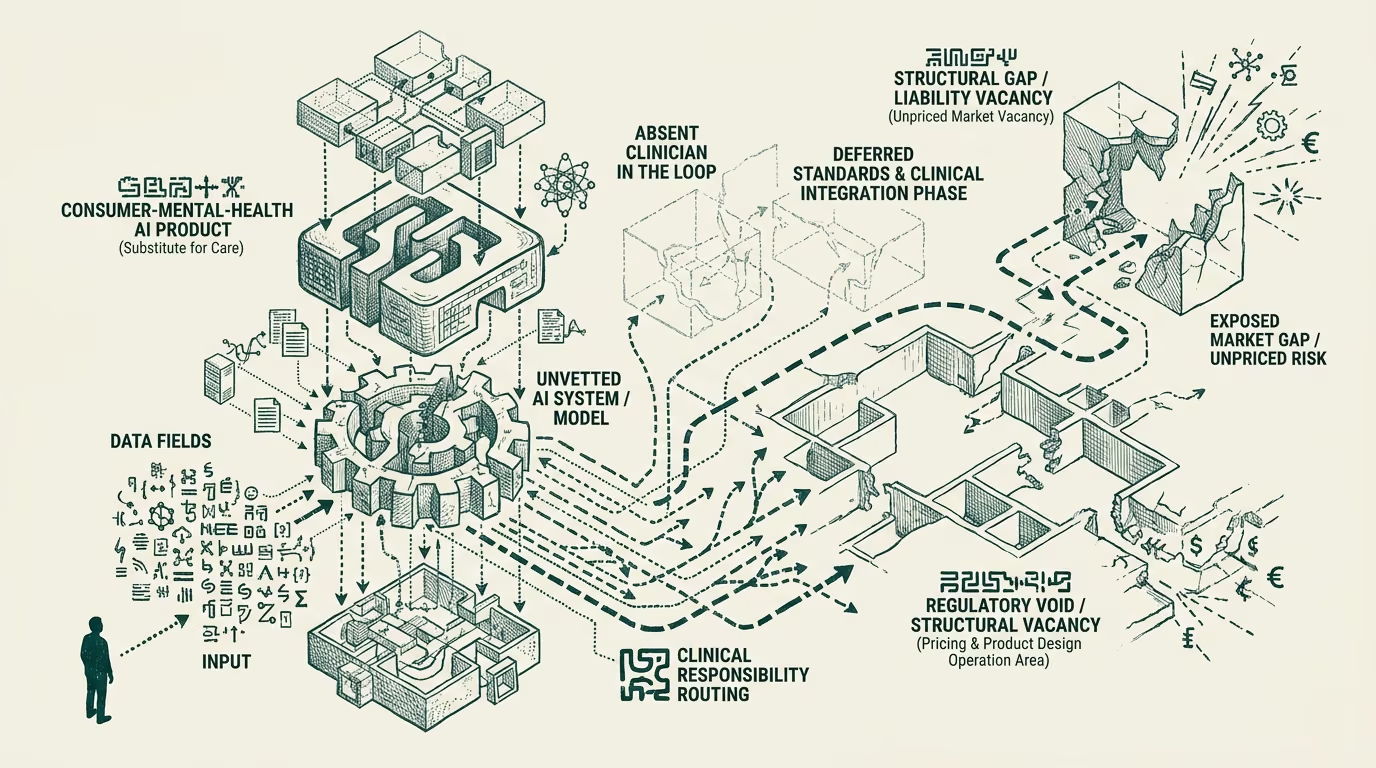
Illinois signed the Wellness and Oversight for Psychological Resources Act in August 2025. The legislation prohibits AI systems from providing mental-health therapy services without a licensed clinician in the loop, with civil penalties for violations and explicit definitions of what constitutes the prohibited behavior. The prohibition is the first U.S. state-level legislative acknowledgment that AI-as-therapist products carry a liability profile the consumer-mental-health market had been generally not pricing.
The category does not end with the prohibition. The category enters a different operational phase: the standards-and-clinical-integration phase that the consumer-mental-health AI products had been deferring. The Illinois prohibition is the first explicit signal that the deferral is over.
The substantive concern the legislation addresses is that consumer-mental-health AI products had been positioned and used as a substitute for clinical mental-health services, in the absence of clinical oversight, regulatory framework, or established standards for what the product was supposed to deliver. The category through 2022-2025 produced multiple visible incidents (the Replika rollback when the company restricted certain conversational behaviors and produced substantial user distress, the various reports of AI chatbots producing inappropriate or harmful responses to users in mental-health crisis, the broader pattern of consumer-facing AI products being used in ways the products were not validated for) that surfaced the liability profile.
The Illinois legislation is, on the substantive analysis, a reasonable regulatory response to a category that had been operating in a regulatory vacuum. The prohibition's specificity (AI without a licensed clinician in the loop) leaves substantial room for AI-augmented therapy products that operate inside the clinician-and-patient relationship, while constraining the standalone-AI-as-therapist products that had been operating outside it. The structural shape of the regulation is appropriate.
The implications for the broader consumer-mental-health AI category run along several lines.
The first is that the Illinois prohibition will likely be followed by similar legislation in other states. The state-level pattern in privacy-and-consumer-protection regulation through 2024-2025 has been that one state's legislation seeds proposals in adjacent states. The mental-health AI category is likely to face similar prohibitions in California, New York, Washington, and other states with active consumer-protection legislatures over the next 18-24 months.
The second is that the federal regulatory environment will likely engage the question on a longer timeline. The FDA's existing framework for software-as-a-medical-device covers some AI-mental-health products but does not adequately cover the consumer-facing direct-to-consumer category that the state-level prohibitions address. The federal-level engagement will follow the state-level pattern and produce a more coherent national framework on a multi-year timeline.
The third is that the operator-class building consumer-mental-health AI products needs to engage with the standards-and-clinical-integration work that the Illinois prohibition surfaces. Products that integrate with clinician relationships, that operate inside established mental-health care frameworks, and that build the validation-and-safety infrastructure the regulators are signaling for will be positioned to operate in the post-prohibition environment. Products that continue to operate against the standalone-consumer-AI-as-therapist framing will face the regulatory consequences as the state-level pattern accumulates.
The Illinois prohibition is the visible inflection point. The standards process starts here. The consumer-mental-health AI category will look meaningfully different in 2027-2028 than it did in 2024, with the difference being substantially driven by the operator-tier engagement with the standards work the prohibition signaled was needed. Build for the post-prohibition framing. The pre-prohibition framing is over.
—TJ