The Intelligence Age is the next round's pitch.
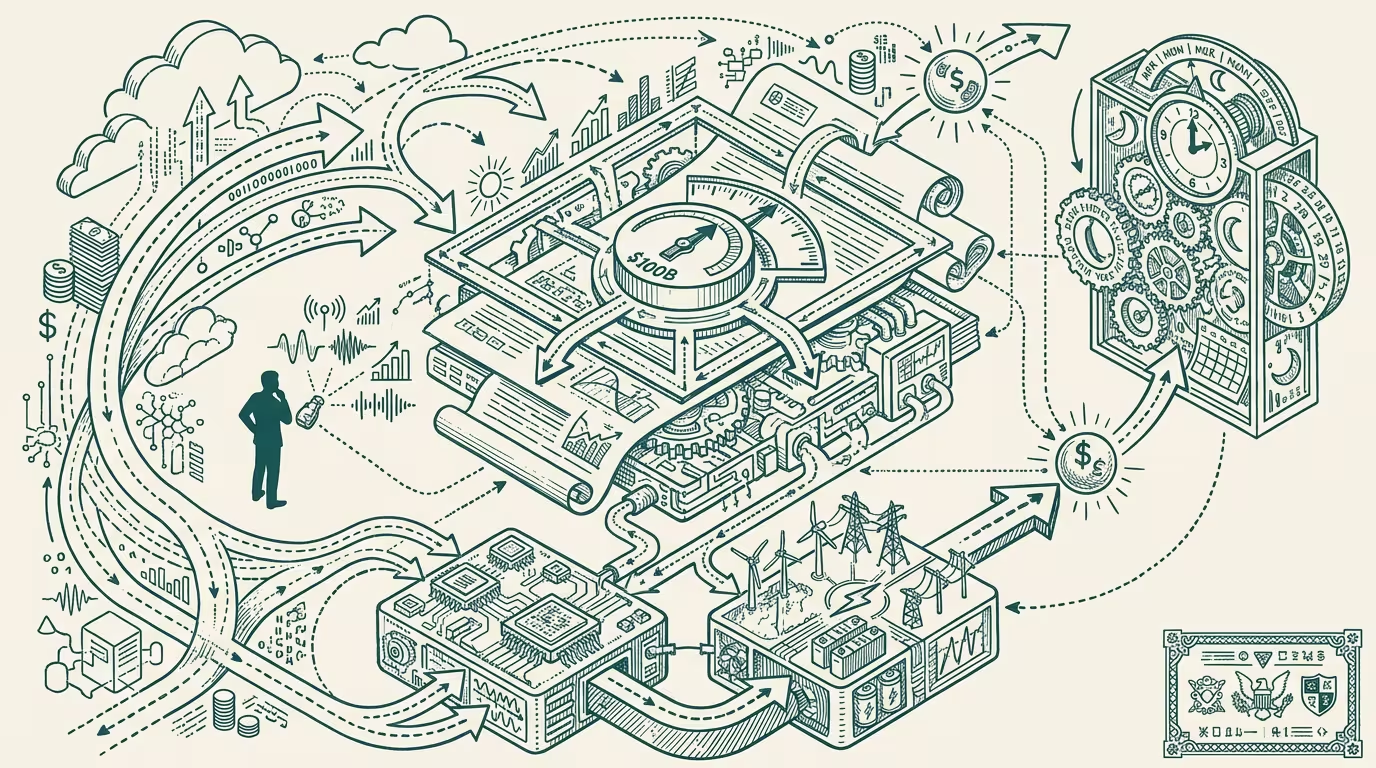
Sam Altman published "The Intelligence Age" on his personal blog on September 23, 2024. The thesis: superintelligence is "a few thousand days" away, the bottleneck is compute and energy, and the prosperity unlock that follows will be civilization-scale. The trade press read it as a vision document.
Read flat — without the optimism scaffolding — it is a sales pitch for the next $100B raise. _The manifesto is the round's pitch._ Hold that frame in view. Everything that follows traces back to it.
The signal is in the timing and the platform. CEO essays land on the personal blog when the message is meant for a specific audience: VC LPs, sovereign-wealth deal teams, and the policy class that approves capex of the size OpenAI's next infrastructure round will require. The message is calibrated for that audience. The platform routes around the press cycle that would, if the same message landed in WSJ or NYT, generate skeptical analysis before the round closes.
Trace the framing back to the round and the calendar lines up. The "thousand days" framing is the operator-relevant tell. _Thousand days is precisely the timeline that makes the round's compute commitments load-bearing._ A two-year timeline would underjustify the capital ask; a ten-year timeline would let the LP defer commitment. Three years is the timeline that requires capital deployed in 2024-2025 to capture the 2027-2028 capability window. The essay's calendar is the round's calendar.
Trace the triad back to the procurement categories and the deck-slide structure surfaces. The "compute, energy, human will" triad maps cleanly to the three procurement categories the next round will fund: GPU supply (compute), data-center power agreements (energy), and the operator-class talent pull (human will, in the form of $5M+ comp packages for the model-team builder class). Each line of the manifesto is, in operating terms, a slide from the deck.
Trace the manifesto-to-funding lag and the cycle confirms the read. Operators tracking the AI category's strategic-direction question should watch the funding announcements that follow the manifesto by 30-90 days. The OpenAI funding announcement in late 2024 (post-manifesto) was a $6.6B round at $157B valuation. By Q1 2025 the round structure included a $100B+ commitment from SoftBank tied to Stargate. The manifesto-to-funding lag was precisely the publication-cycle lag that VC LPs need to digest the thesis.
Trace it through to the category-leader operators across pillars and the manifesto becomes a forcing function. Healthcare-AI, fintech-AI, government-AI, defense-AI, education-AI — every category-leader in 2024-2025 had to position against the Altman framing. Either the company's plan reads consistent with the thousand-days timeline (and is, by the manifesto's logic, capturing the upside) or the plan reads against it (and has to defend why the timeline doesn't apply to the category). Both positions are operating-coherent. Defaulting on the question is not. The manifesto's effect on category strategy is, in operating terms, the forcing function for every category-leader to take a position on the timeline.
Trace it through to the trade-press read and the misalignment surfaces. The press read the essay as either utopian forecasting or marketing-copy. Both readings are partially correct and miss the part that holds. The durable read is that the essay is the discipline-document for the round. Operators reading it that way calibrate their own strategic positioning to the calendar the essay names. Operators reading it as utopianism don't. The first group's plans are, in 2025-2026, calibrated to a more aggressive deployment curve. The second group's plans are calibrated to the median timeline and are, in operating practice, late.
The same shape recurs across frontier-lab leadership. Anthropic's "Machines of Loving Grace" (October 2024) followed the same pattern with a different aesthetic. Demis Hassabis's interviews through late 2024 and 2025 followed the same pattern from the Google DeepMind side. Each manifesto is a calibration document for the next round; each is timed to the funding cycle of the lab; each carries operator-tier signal that the trade press undertreats.
What survives all of this is that "The Intelligence Age" is one of the more consequential AI-category-positioning documents of 2024 because it set the calendar against which every other plan in the category is calibrated. The trade press will, of course, write it up as a vision document for another year. The structural read is that it is a fundraising document with vision aesthetics.
The operator question is whether the company's plan reads consistent with the calendar the manifesto names, against it, or independent of it. Each answer is operating-coherent. The default — not picking — is the only answer that is, in 2025, not operating-coherent. Most operators are defaulting. The manifesto did its work on the round. Whether it does its work on the timeline is, in operating terms, the question the next four years answer.
The Intelligence Age is the next round's pitch. The operator who reads it as the pitch reads it correctly. The one who reads it as the timeline is reading the deck the LPs already approved.
—TJ