Marriott stopped publishing the chart. The redemption costs went up anyway.
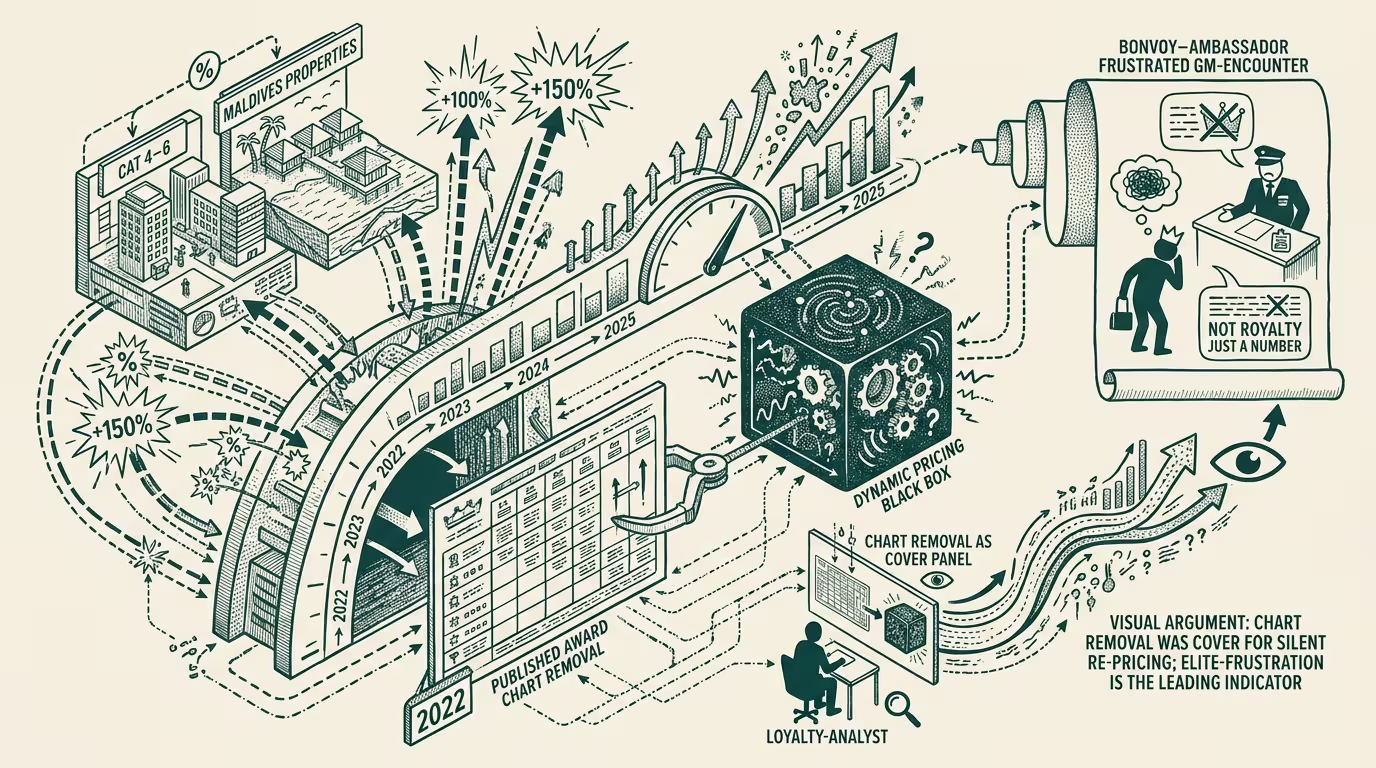
Marriott stopped publishing its Bonvoy award chart in 2022. The replacement was a "dynamic pricing" model where redemption costs varied by property, by date, and by inventory pressure. The marketing copy framed it as a flexibility feature. The operating reality was that redemption costs went up across the category, with Cat 4-6 hotels seeing the largest absolute increases and Maldives-tier properties roughly doubling.
The trade-press coverage of this was, for two years, sparse. View From The Wing's Gary Leff ran the math quarterly and showed the data. Travel-blog comment sections discussed it. Reddit r/awardtravel knew. Mainstream travel-trade publications mostly didn't write about it because the airline-FFP-devaluation story was the bigger news cycle and the hotel-loyalty-program devaluation looked like a smaller version of the same pattern.
It was not the same pattern. The hotel pattern was sharper.
The airline FFP devaluations of 2023-2024 were, at least, announced. Members got a notice, a date the change took effect, a chance to plan around it. The Marriott approach was structurally different: no chart, no announcement, no notice. A member checking redemption availability on a property in March 2024 saw one number; the same member checking the same property in September 2024 saw a different number. The difference was sometimes 30%. The mechanism was, by design, not legible to the member.
The viral reference point came from a Bonvoy Ambassador (the program's top tier, requiring 100+ nights per year) posting on a private Facebook group in mid-2024. The post described an encounter at a Marriott property where the GM, asked about the redemption-cost increase on a multi-night stay, responded with what the member quoted as "you are just a number, not royalty." The post crossed Facebook to broader travel media inside a week. The phrase became, briefly, the operating-class shorthand for how loyalty-program promises diverge from operational delivery.
The argument that holds is two-part.
First, the trust decay is real. A loyalty program is, in operational terms, a multi-year promise. The member earns currency on the implicit understanding that the currency holds value at redemption. When the redemption cost moves silently and unilaterally, the program is not honoring the promise. The fact that no contract obligated the program to honor the promise is, in the trust frame, irrelevant. The trust was the program's actual asset. The trust is being spent down.
Second, the operator response from Marriott has been to compete on the property-experience layer rather than the loyalty-program layer. The reasoning, in operating terms, is that the program loyalty is going to be eroded regardless of what the program does and that the property-experience is what holds the customer. That reasoning is half-correct. The customer who books for the property-experience holds. The customer who has been booking for the loyalty-program-promise switches to Hyatt or Hilton, both of which still publish charts and still announce changes with notice.
The thing that crosses pillars is the same one the airline FFPs are running: customer-lifecycle trust decay is the actual receipt. The program brand promise vs the front-line delivery gap is the same arc that surfaces in airline-elite, SaaS-tier, and physician-loyalty contexts. The part that holds is that loyalty programs that move quietly are programs that bleed quietly, and the bleed shows up in churn rates four to six quarters after the silent change. Marriott will, of course, see the churn data internally. Whether the operating decision changes is the next eighteen months of the program's strategic posture.
—TJ