Texas passed TRAIGA. Three states now have comprehensive AI laws. The patchwork is the policy.
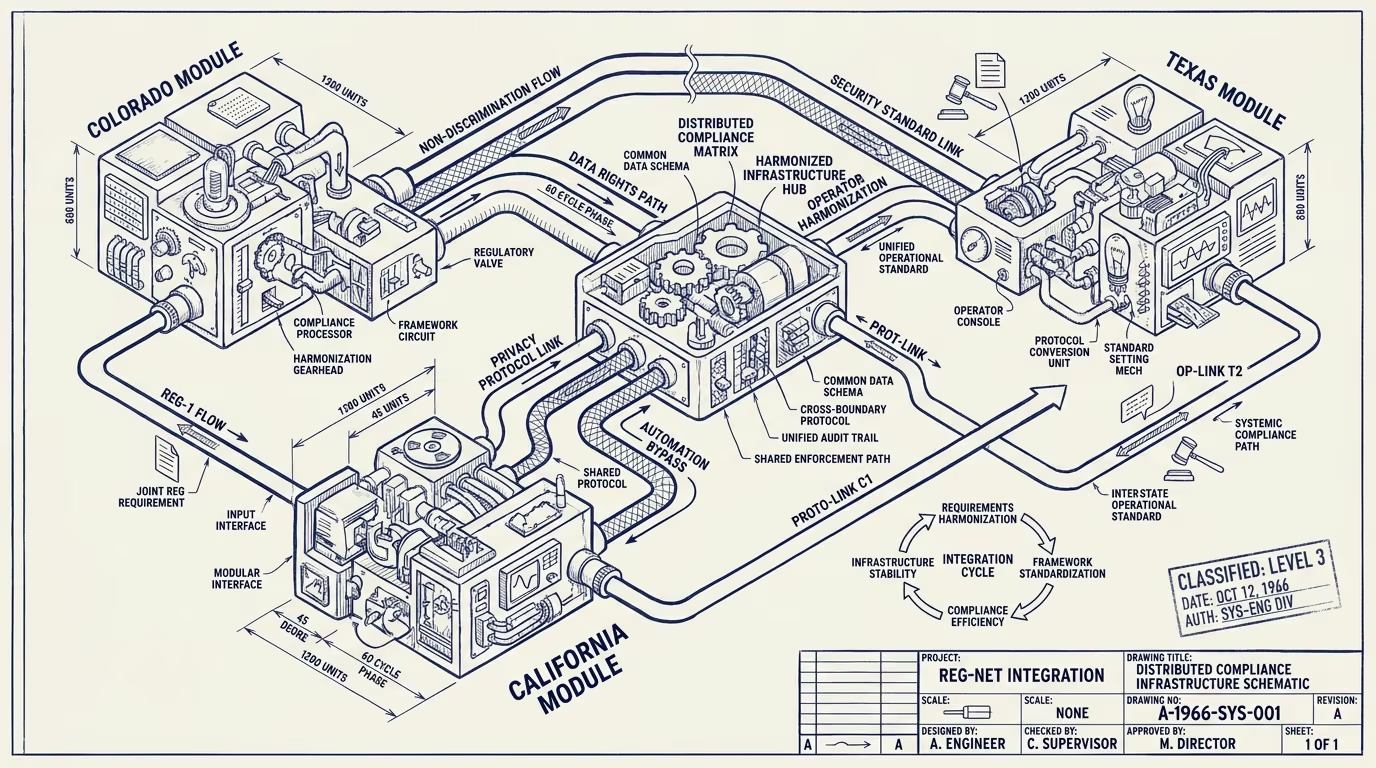
Texas signed the Responsible AI Governance Act in June 2025, becoming the third U.S. state with comprehensive AI legislation after Colorado's SB 205 (May 2024) and California's SB 53 (mid-2025). The trajectory through the next 18-24 months is likely to add several more states (New York, Connecticut, Oregon, Massachusetts, and Washington all have legislation in various development stages), with the cumulative effect being that the state-level patchwork becomes the functional U.S. AI regulatory framework.
For operators serving multi-state populations, three observations follow.
The first is that the patchwork is structurally similar to the data-privacy regulatory environment that emerged through 2018-2024. The CCPA, the various state-level data-privacy laws, the state-level health-data laws (MHMDA, the equivalent regimes in other states), and the broader category of state-level privacy regulation produced a patchwork that the federal government did not pre-empt and that operators have learned to navigate through harmonized compliance frameworks. The AI regulatory patchwork is following the same trajectory and will likely settle into a similar harmonized-compliance pattern over the next several years.
The second is that the operator-class compliance posture should be calibrated for the patchwork rather than for any specific state's specific legislation. Operators who build narrow compliance frameworks against Colorado-only or California-only requirements will face compounding rework as additional states' laws bind. Operators who build harmonized compliance frameworks that handle multiple state-level requirements simultaneously produce more durable compliance positions.
The third is that the federal-level pre-emption that some operators have been planning against is unlikely to materialize on the relevant timeline. The Trump administration's deregulatory posture combined with congressional inability to produce comprehensive AI legislation through three legislative sessions suggests that the federal-level pre-emption scenario is structurally unlikely through 2028 at minimum. Operators planning their compliance work against the federal-pre-emption-arrives scenario are planning against a scenario that the political environment does not support.
The cumulative cost of the state-level patchwork for multi-state operators will be substantial. The compliance work, the legal-and-regulatory engagement, the engineering work to support multiple state-level requirements simultaneously: these add operational cost that the federal-comprehensive-framework would have reduced. The cost is real and the operators absorbing it should price it into their cost-of-operations models.
For investors evaluating AI investments through 2025-2027, the read suggests that the compliance-readiness of the company is a substantive due-diligence dimension. Companies whose compliance posture is calibrated for the patchwork produce more durable products and face less near-term operational risk than companies that have not yet engaged with the patchwork seriously.
For the broader political-class engagement, the read is that the patchwork-as-policy is the durable structural feature for the foreseeable horizon. The advocacy-class and policy-class work should engage with the patchwork directly rather than waiting for federal pre-emption that is unlikely to arrive. The patchwork is the policy. Build accordingly.
—TJ