California AB 1018 is the automated-decisions safety act the hiring-AI vendors didn't see coming.
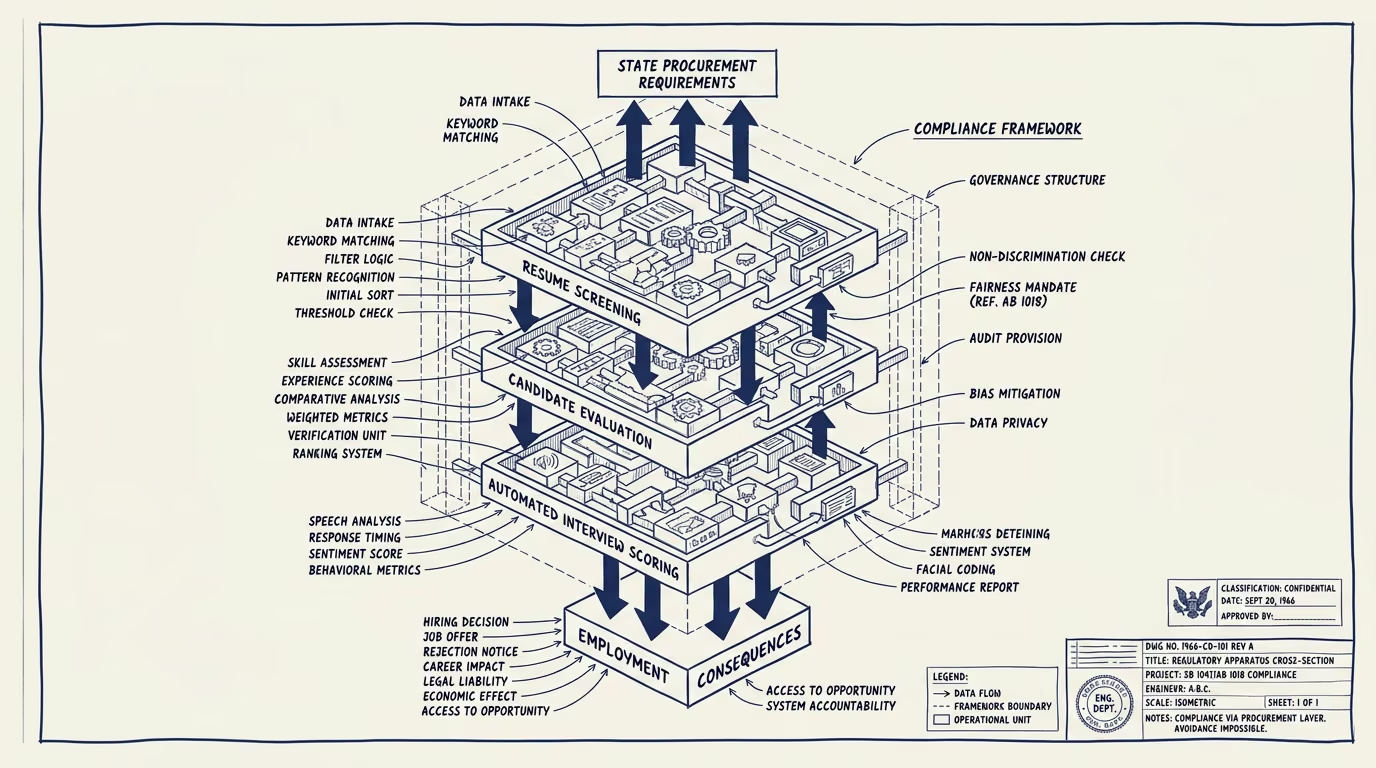
California Assembly Bill 1018, the Automated Decisions Safety Act, has been moving through the California legislature in Q4 2025 with substantial momentum. The bill extends AI regulation to automated decision-making in high-stakes domains including hiring, lending, housing, and adjacent consequential-decision categories. The bill is a separate vehicle from the SB 1047 / SB 53 trajectory and addresses a different operational layer of AI deployment.
The hiring-AI vendors who interpreted the SB 1047 veto in September 2024 as a deregulatory signal have, on the AB 1018 evidence, been reading the wrong signal. The post-SB-1047 California regulatory environment has been moving toward more-targeted bills (Newsom signed AB 2013 and SB 1120 in the same window as the SB 1047 veto, then SB 53 in 2025) rather than toward deregulation. AB 1018 continues the pattern at the automated-decisions layer.
For hiring-AI vendors, three observations follow.
The first is that the bill's scope reaches squarely into the hiring-AI deployment category. Resume-screening AI, candidate-evaluation AI, automated-interview-scoring tools, the broader category of AI systems making consequential employment decisions: all of these are within scope of the bill's framework. Vendors operating in this category in California will face specific compliance requirements that the prior California environment did not require.
The second is that the bill's framework is structurally similar to the Colorado SB 205 framework discussed elsewhere, with risk-tiered classification and impact-assessment-and-transparency requirements. Vendors who have built compliance infrastructure for Colorado SB 205 are partially prepared for AB 1018; vendors who have not are facing accelerated deployment timelines as both bills bind through 2026-2027.
The third is that the federal-level pre-emption that some vendors have been planning against is, again, unlikely on the relevant timeline. The hiring-AI category is being regulated at the state level because the federal level is not producing legislation, and the state-level patchwork is the durable regulatory framework for the category. Vendors planning compliance work against the federal-pre-emption-arrives scenario will face the patchwork without preparation.
The signal worth reading carefully is the speed at which the California legislature has been producing AI legislation post-SB-1047. The veto was framed by the deregulatory-leaning interpretation as the end of California AI regulation; the actual trajectory has produced AB 2013, SB 1120, SB 53, AB 1018, and additional bills under development. The trajectory is not consistent with the deregulatory interpretation. The trajectory is consistent with the more-targeted-legislation interpretation discussed elsewhere.
For hiring-AI vendor founders and investors evaluating the category, the practical advice is to engage with the AB 1018 framework directly and to plan compliance work against the harmonized state-level patchwork rather than against any specific bill's scope alone. The pattern is durable. The compliance work is necessary. The vendors who do the work produce more durable products than the vendors who continue to interpret California's regulatory environment as deregulatory.
AB 1018 is the procurement-facing version of the regulatory work the SB 1047 veto did not end. The hiring-AI vendors who missed the signal are reading the trajectory wrong. The trajectory is the patchwork. Build accordingly.
—TJ