OpenAI's S-1 is the governance doc. Read it before the next contract.
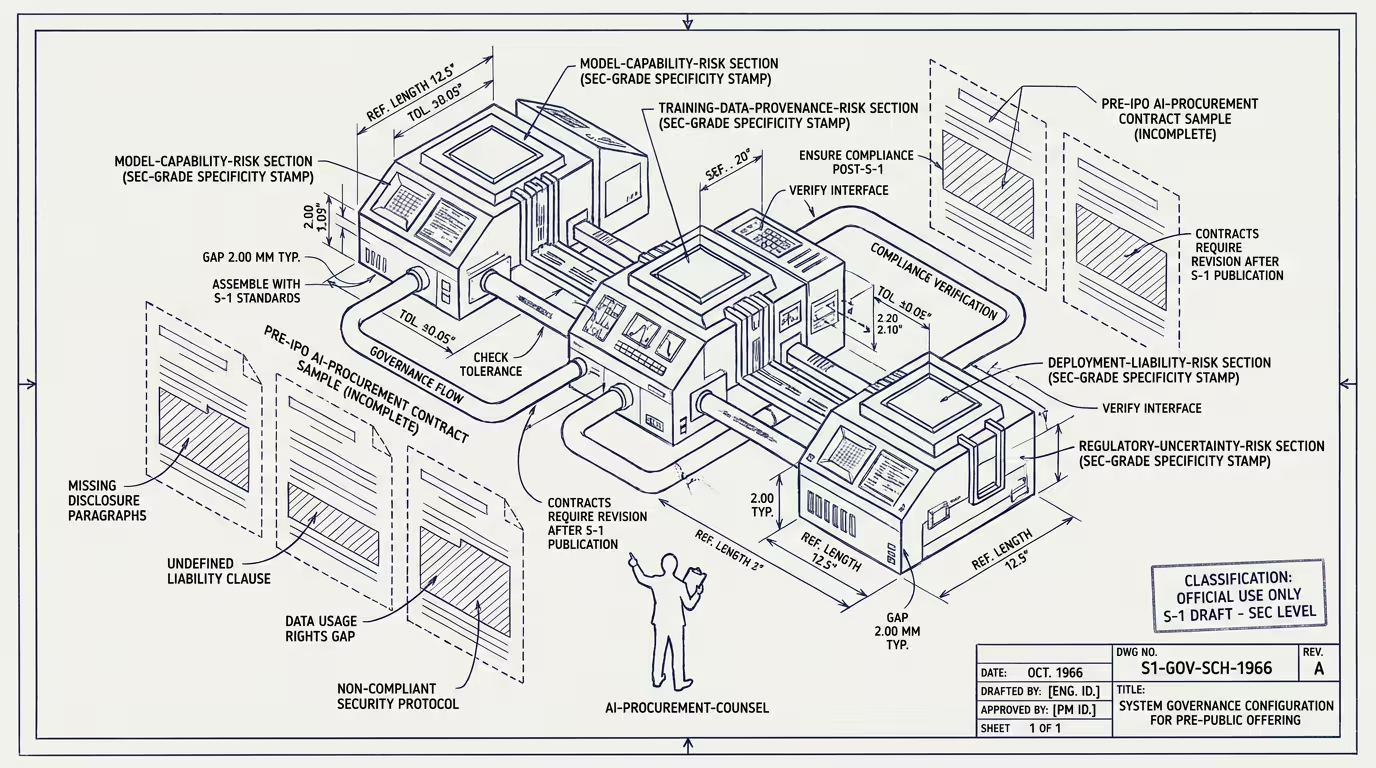
OpenAI's late-2026 IPO at an anticipated $500B valuation will, when the S-1 prospectus drops, produce the first comprehensive risk-factor disclosure from a frontier AI company. The disclosure has to clear SEC standards, which means every material risk has to be named with specificity. The disclosure has to cover regulatory exposure, model-safety incidents, customer-concentration, talent-retention, infrastructure-procurement-counterparty risk, and competitive-positioning relative to frontier-lab peers. Each is a category the procurement-class buyer has been asking the AI category to disclose since 2023.
The S-1 is the governance document the industry has been asking for. _Every AI procurement contract written before the prospectus drops will look incomplete after._
Compare the contract written before disclosure with the contract written after, and the gap surfaces. The pre-disclosure contract assumes generic AI-vendor risk language, indemnification calibrated to known incident classes, regulatory clauses calibrated to current visible regimes, and customer-concentration assumed as not-material. The post-disclosure contract is calibrated to the specific incident classes the S-1 names, the specific regulatory regimes it discloses, and the specific customer-concentration percentages it itemizes. The buyer who walks into procurement after the disclosure has language the buyer who signed before the disclosure does not.
The risk factors that bite hardest fall in three categories. Model-safety incident disclosure forces the issue first. The S-1 will require disclosure of material safety incidents the company has experienced, the remediation processes in place, and the contingent liabilities. Procurement contracts written without indemnification language calibrated to the disclosed incident classes will look operating-thin once the incident classes are public. The cost when this shows up is contract renegotiation under information asymmetry — the buyer has to renegotiate after the seller has disclosed the risks the buyer didn't price.
Customer-concentration disclosure forces the issue second. The S-1 will name the customer-concentration percentages. If the top-10 customers represent ≥40% of revenue (a plausible number given enterprise-AI economics in 2026), the customer-concentration risk is material. Operators who are in the top-10 capture discount-leverage they did not have before disclosure; operators who are not are pricing the platform-stability risk that the disclosure surfaces. Both classes have to recalibrate procurement strategy after the disclosure lands.
Regulatory-exposure disclosure forces the issue third. The S-1 will name the regulatory regimes the company is exposed to (EU AI Act, U.S. state-level legislation, sector-specific regulations in healthcare and finance, emerging frontier-AI legislation). The disclosure will include compliance-cost estimates and contingent regulatory liability. Procurement contracts written without regulatory-change-tolerance clauses will look operating-thin once the regulatory exposure is itemized in the prospectus. The cost is contract amendment volume — the buyer has to renegotiate dozens of contracts to add the language the disclosure makes load-bearing.
The same shape recurs across frontier-AI IPOs in sequence. OpenAI's S-1 is the first; Anthropic's likely 2027 S-1 is the second; the next public-listing event in the frontier-lab category is the third. Each disclosure produces one round of procurement-contract reframing. Operators running active procurement programs through the disclosure cycle have to absorb the renegotiation cost or run the strategy of negotiating contracts now with disclosure-anticipating language.
What survives all of this is that OpenAI's S-1 will, in late 2026, become the reference document for AI-procurement risk discussion across every category the company sells into, the procurement-class buyers who anticipate the disclosure now will have negotiating leverage that buyers waiting for the disclosure will not, and the operator-class discipline is to write contract language with disclosure-anticipating clauses ahead of the prospectus drop. By 2027 the post-S-1 contract language will be standard. In 2026 it is a competitive advantage for the operators implementing it now.
Read the S-1 the day it drops. _Better — write the contract that anticipates what it will say._ Most operators will read it after they have signed contracts that the disclosure makes operating-thin. The operating-correct sequencing is contract-first, then S-1-confirms-the-language. The disclosure is, in late 2026, the audit moment for every procurement-contract decision the operator class made through 2025-2026.
—TJ